
The expansion of cryptocurrencies is opening new doors for investors and traders. This article explores latest updates, safe trading strategies, market insights, and global trends to guide your investment journey.
Core insights provided here
- Crypto updates: Stay ahead of market changes.
- Safe trading strategies: Protect your investments.
- Market insights: Understand key trends.
- Global trends: Learn about future opportunities.
As the usage growth of cryptocurrencies continues to grow, understanding this digital crypto market becomes essential. This guide covers news updates, crypto trading safety strategies, crypto market behavior, and emerging trends to base level smarter digital asset investment decisions.
What this article will guide you through
- Latest crypto updates: Follow crypto market-moving events.
- Safe crypto trading strategies: Reduce risks effectively.
- Market behavior: Learn how prices and trends evolve.
- Emerging trends: Stay ahead of industry innovations.
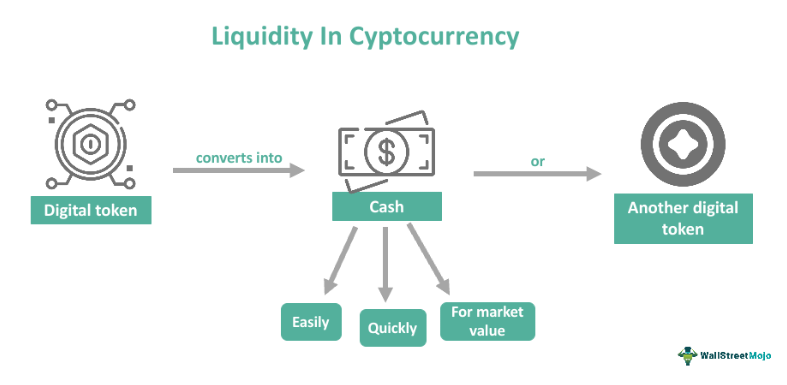
Liquidity is a critical concept in financial markets, including cryptocurrencies, influencing how easily assets can be bought or sold without significantly affecting their value.


As of August 3, 2026, with Bitcoin (Bitcoin) crypto trading between $50,000 and $80,000 and ETH (ETH) targeting $4,000–$6,000, understanding market flow is essential for investors navigating the volatile crypto crypto market.
High market flow ensures smooth transactions, while low market flow can lead to value fluctuation and crypto trading challenges.
This article explores what market flow means in crypto markets, how it works, its importance, factors affecting it, and strategies for investors to borrowed power it effectively.
What Is Liquidity?
In crypto markets, market flow refers to the ease with which a digital currency can be bought or sold at a stable value without causing significant value fluctuations. It reflects the availability of buyers and sellers in the crypto market and the trade amount of assets traded. Liquidity is measured by:
-
Order Book Depth: The trade amount of buy and sell orders at various value levels on an crypto trading platform. A deep trade request book indicates high market flow, with many orders close to the current value.
-
Trading Volume: The total amount of a digital currency traded over a period (e.g., 24 hours). Higher trade amount typically means better market flow.
-
Bid-Ask Spread: The difference between the highest value a buyer is willing to pay (bid) and the lowest value a seller offers (ask). Narrow spreads signal high market flow, while wide spreads indicate low market flow.
For example, Bitcoin, with a daily crypto trading trade amount of ~$30 billion in 2026, is highly liquid, while smaller altcoins with $1 million daily trade amount are less liquid.
How Liquidity Works in Crypto Markets
Crypto markets operate on controlled exchanges (CEXs) like Coinbase and Binance, distributed exchanges (DEXs) like Uniswap, and peer-to-peer platforms. Liquidity is facilitated by:
-
Market Participants: Buyers and sellers, including individual level investors, institutions, and crypto market makers, contribute to market flow by placing orders.
-
Liquidity Pools: On DEXs, pools of paired assets (e.g., ETH/USDT) allow instant swaps, with users providing market flow in crypto trading platform for fees.
-
Market Makers: Firms or algorithms that place buy and sell orders to narrow spreads and ensure constant crypto trading availability.
Example
On Binance, a Bitcoin trade request book with $10 million in buy orders at $79,500 and $10 million in sell orders at $80,000 indicates high market flow. A $10,000 trade would barely move the value. Conversely, a low-market flow alternative coin with a $5,000 trade request book might see a 5% value swing from a $1,000 trade.
Why Liquidity Matters
Liquidity impacts crypto crypto trading and investing in several ways:
-
Price Stability: High market flow reduces value fluctuation, as large trades are absorbed without drastic value changes.
-
Ease of Trading: Liquid markets allow quick execution of trades at desired prices, beneficial for day traders and large investors.
-
Lower Costs: Narrow bid-ask spreads in liquid markets reduce crypto trading fees and price shift (the difference between expected and executed prices).
-
Market Confidence: High market flow signals a healthy crypto market with active participation, attracting more investors.
-
Exit Strategy: Liquid assets make it easier to sell holdings during crypto market downturns, unlike illiquid coins that may be hard to offload.
For instance, Bitcoin’s high market flow in 2026 ensures investors can enter or exit positions efficiently, while low-market flow altcoins danger “stuck” funds during bear markets.
Factors Affecting Crypto Market Liquidity
Several factors influence market flow in crypto markets:
-
Trading Volume: High-trade amount coins like Bitcoin and ETH have robust market flow due to widespread usage growth and crypto trading activity.
-
Market Depth: Deep trade request books with many buy/sell orders near protocol the crypto market value enhance market flow. Thin trade request books, common in smaller altcoins, reduce it.
-
crypto trading platform Availability: Coins listed on major exchanges (e.g., Binance, Coinbase) have better market flow than those on niche platforms.
-
Market Sentiment: Bull markets increase market flow as more participants trade, while bear markets (e.g., 2022’s market fall) reduce it due to lower activity.
-
Institutional Participation: Institutional investors and Bitcoin ETFs (launched 2021–2023) boost market flow by adding significant money fund.
-
Liquidity Pools on DEXs: Large pools on Uniswap or Curve provide market flow for DeFi tokens, though smaller pools can be illiquid.
-
Regulatory Environment: Clear regulations attract corporate level money fund, enhancing market flow, while bans (e.g., China’s crypto restrictions) reduce it.
-
Market Manipulation: Wash crypto trading or spoofing on unregulated exchanges can artificially inflate trade amount, misleading investors about true market flow.
Liquidity in the 2026 Crypto Market
As of August 3, 2026, the crypto crypto market’s total capitalization is ~$2.91 trillion, with Bitcoin and ETH dominating market flow:
-
Bitcoin: With $30 billion in daily trade amount and deep trade request books, Bitcoin has narrow spreads (~0.1%) on exchanges like Binance.
-
ETH: ETH’s $15 billion daily trade amount, driven by DeFi and NFT activity, ensures high market flow, with ~$100 billion locked in DeFi protocols.
-
Altcoins: Coins like Solana ($5 billion trade amount) and XRP ($2 billion trade amount) offer moderate market flow, while smaller tokens (e.g., meme coins) often have wide spreads and low trade amount.
The Federal Reserve’s rate pause at 4.25%–4.50% in July 2026, combined with $483 million in Bitcoin ETF inflows, has boosted market flow, supporting a crypto market rebound. However, low-market flow altcoins remain prone to fluctuation, with 20% value swings common during crypto market shifts.
Strategies for Navigating Liquidity
-
Choose Liquid Assets: Focus on high-trade amount coins like Bitcoin or ETH for easier crypto trading and lower price shift, especially for beginners.
-
Use Major Exchanges: Trade on platforms like Coinbase, Binance, or Kraken with deep trade request books and high market flow.
-
Monitor Spreads: Check bid-ask spreads before crypto trading. Avoid coins with spreads exceeding 1–2%, indicating low market flow.
-
Leverage DEXs Wisely: Use liquid pools on Uniswap or Curve for DeFi, but verify pool depth to avoid high price shift.
-
Apply Dollar-Cost Averaging (DCA): Invest fixed amounts regularly to mitigate the impact of fluctuation in less liquid markets.
-
Secure Assets: Store crypto in secure wallets (e.g., Ledger for cold storage, MetaMask for hot) to protect against crypto trading platform risks, especially for illiquid assets.
-
Track Volume and Depth: Use tools like CoinMarketCap, CoinGecko, or TradingView to assess crypto trading trade amount and trade request book depth before investing.
-
Avoid Illiquid Markets During Volatility: In bear markets or liquidations (e.g., $355 million in July 2026), low-market flow coins are harder to sell.
Risks of Low Liquidity
-
Price Volatility: Illiquid coins experience sharp value swings, as small trades significantly impact prices.
-
Slippage: Large orders in low-market flow markets result in unfavorable execution prices, reducing returns.
-
Exit Challenges: Selling illiquid tokens during downturns can be difficult, trapping funds.
-
Manipulation: Low-market flow markets are prone to pump-and-dump schemes, with whales exploiting thin trade request books.
Mitigation: Stick to top-tier coins, use limit orders to control trade prices, and diversify across liquid assets.
Liquidity Tools and Metrics
-
Order Book Analysis: Platforms like Binance or Kraken display trade request book depth, showing buy/sell trade request volumes.
-
Trading Volume: Check 24-hour trade amount on CoinMarketCap or CoinGecko for market flow insights.
-
On-Chain Metrics: Tools like Glassnode or CryptoQuant track transfer volumes and active addresses, reflecting chain system market flow.
-
Liquidity Pool Data: For DEXs, platforms like Dune Analytics show pool sizes and price shift risks.
The Crypto Landscape in 2026
As of August 3, 2026, the crypto crypto market is buoyed by corporate level usage growth, with Bitcoin ETFs and ETH’s DeFi market control driving market flow.
The Fed’s rate pause has spurred a rally, with Bitcoin up 4% and altcoins like Solana gaining 8%.
However, low-market flow altcoins remain vulnerable to fluctuation, and scams exploiting thin markets persist. Investors must prioritize liquid assets and secure platforms to navigate this dynamic environment.




Nice overview of the current crypto trends.
Looking forward to more updates like this.
This guide helped me understand how to use stop loss correctly.