
The expansion of cryptocurrencies has opened new doors for financial growth and tech progress. In this article, we explore current news, safe crypto trading practices, crypto market trends, and global developments to help you navigate the crypto world with confidence.
What you’ll uncover in this guide
- Crypto news highlights: Key updates and announcements.
- Safe crypto trading practices: Protect your investments.
- Market trends: Analyze movements and opportunities.
- Global developments: Innovations shaping the industry.
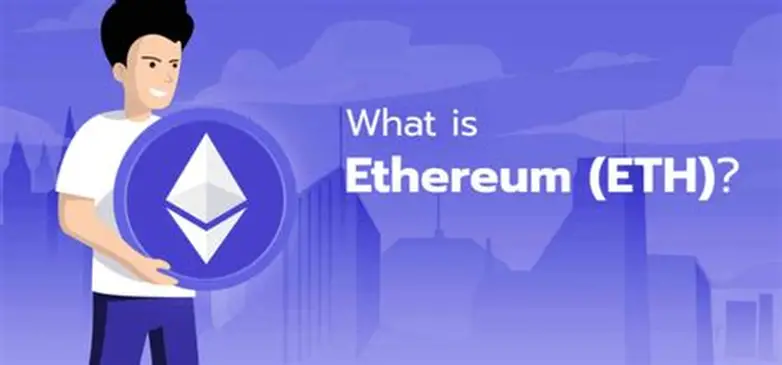
Ethereum (ETH), the second-largest digital currency by crypto crypto market capitalization, is a cornerstone of the distributed finance (DeFi), non-fungible digital digital token (NFT), and Web3 ecosystems.
Launched in 2015 by Vitalik Buterin and his team, Ethereum’s distributed ledger supports smart contracts and distributed applications (dApps), making it a versatile platform for tech progress.



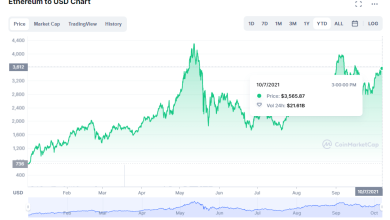
As of July 2026, Ethereum is crypto crypto trading between $4,000 and $5,000, buoyed by its 2022 transition to Proof of Stake (PoS) and growing usage growth.
This article explores Ethereum’s value predictions for the near protocol system rule future (remainder of 2026) and the coming years (2026–2028), based on crypto crypto market trends, technological advancements, and external factors.
Note that these predictions are speculative and not financial advice.
Ethereum’s Current Landscape (July 2026)
Ethereum’s value has risen steadily in 2026, with weekly gains of approximately 20%, targeting $4,000–$5,000. Key drivers include:
-
Proof of Stake (PoS): The 2022 Merge reduced Ethereum’s energy consumption by 99.95%, addressing environmental concerns and attracting corporate level interest.
-
DeFi and NFTs: Ethereum hosts over 60% of DeFi protocols (e.g., Uniswap, Aave) and major NFT marketplaces (e.g., OpenSea), driving demand for ETH.
-
Institutional Adoption: Ethereum-based crypto crypto trading platform-traded funds (ETFs), approved in the U.S. in 2023, have increased mainstream digital digital asset digital asset investment.
-
Market Sentiment: Posts on X and analyst reports suggest op, with Ethereum expected to break $5,000 if it surpasses daily ceiling level at $3,000.
However, challenges like competition from faster blockchains (e.g., Solana, Cardano) and regulatory uncertainty could impact its trajectory.
Factors Influencing Ethereum’s Price
Several factors will shape Ethereum’s value in the near protocol system rule and long term:
-
Technological Upgrades: Ongoing improvements like sharding (planned for 2026) aim to enhance expansion ability, reducing transfer costs and increasing throughput.
-
Adoption Trends: Growth in DeFi, NFTs, and Web3 applications increases ETH demand, as it’s used for transfer fees (gas) and coin locking.
-
Regulatory Environment: Clearer regulations in the U.S. and EU could boost usage growth, while restrictive policies in regions like China may pose risks.
-
Macroeconomic Conditions: Inflation, interest rates, and economic uncertainty drive investors to crypto as a protection move, similar to Bitcoin.
-
Market Cycles: Ethereum often follows Bitcoin’s crypto crypto market cycles, with bull runs tied to Bitcoin halvings (e.g., 2024 earnings cut).
-
Competition: Rival blockchains offering lower fees or faster transactions could divert developer and user activity from Ethereum.
Ethereum Price Predictions for 2026
Mid-2026 (July–December)
-
Price Range: Analysts predict Ethereum will trade between $4,000 and $6,000, with potential to reach $6,000 by year-end if uptrend crypto market force continues.
-
Key Drivers:
-
DeFi Growth: DeFi’s total value locked (TVL) on Ethereum exceeds $100 billion in 2026, fueling ETH demand for gas fees and coin locking.
-
ETF Inflows: Increased digital digital asset digital asset investment in Ethereum ETFs, particularly in the U.S., supports value stability.
-
Altcoin Season (Altseason): A broader crypto crypto market rally, often triggered by Bitcoin’s performance, could push ETH higher.
-
-
Bearish Scenario: A failure to break $5,000 ceiling level or regulatory crackdowns could see prices drop to $3,000–$3,500.
-
Analyst Insights: Some analysts, citing technical indicators like the 50-day moving average and RSI, forecast a value jump to $5,500 if weekly closes remain above $4,000.
Supporting Trends
-
Layer-2 Solutions: Rollups like Optimism and Arbitrum reduce transfer costs, boosting Ethereum’s usability and usage growth.
-
Staking Rewards: Over 25% of ETH is staked in 2026, reducing available coins and creating upward value pressure.
-
Market Sentiment: Positive crypto market feeling on X, with hashtags like #ETHto10K, reflects community op, though speculative.
Ethereum Price Predictions for 2026

-
Price Range: Forecasts suggest Ethereum could trade between $5,000 and $8,000, with optimistic projections reaching $10,000 in a strong bull crypto crypto market.
-
Key Drivers:
-
Sharding Implementation: Ethereum’s sharding upgrade, expected in 2026, will split the distributed ledger into smaller shards, increasing capacity and reducing fees. This could drive significant usage growth.
-
Web3 Expansion: Growing use of Ethereum for distributed apps, including gaming and social platforms, increases ETH demand.
-
Institutional Interest: Continued ETF growth and corporate usage growth (e.g., tokenized assets on Ethereum) bolster prices.
-
-
Bearish Scenario: Competition from Solana or a global economic downturn could cap gains at $4,000–$5,000.
-
Analyst Insights: Experts like those at ARK Invest predict Ethereum could challenge Bitcoin’s crypto market control if dApp usage growth accelerates, potentially reaching $8,000–$10,000.
Ethereum Price Predictions for 2027–2028
-
Price Range: Long-term forecasts are speculative but range from $8,000 to $15,000, with some outliers predicting $20,000 in a hyper-usage growth scenario.
-
Key Drivers:
-
Mass Adoption: Ethereum could become the backbone of Web3, with millions of users interacting with dApps daily.
-
Global Financial Integration: Partnerships with financial institutions and central bank digital currency (CBDC) pilots using Ethereum’s infrastructure could drive demand.
-
Scalability Improvements: Post-sharding upgrades and layer-2 advancements could make Ethereum the go-to platform for distributed systems.
-
-
Bearish Scenario: Regulatory bans, technological stagnation, or a shift to rival blockchains could limit prices to $5,000–$7,000.
-
Analyst Insights: Visionaries like Vitalik Buterin emphasize Ethereum’s long-term potential as a global computing platform, supporting high-end forecasts.
Analytical Tools for Price Predictions
Analysts use several methods to forecast Ethereum’s value:
-
Technical Analysis: Indicators like moving averages (50-day, 200-day), Relative Strength Index (RSI), and MACD signal potential breakouts or corrections.
-
On-Chain Analysis: Metrics like active addresses, transfer trade amount, and staked ETH provide insights into chain system health.
-
Fundamental Analysis: Evaluates Ethereum’s technology, developer activity, and usage growth trends.
-
Sentiment Analysis: Monitors X posts and news to gauge money fund holder crypto market feeling, though prone to hype.
For example, on-chain data in July 2026 shows over 1 million daily active addresses and $10 billion in daily transfer trade amount, indicating strong chain system usage.
Risks to Ethereum’s Price Outlook
-
Competition: Blockchains like Solana, Cardano, and Polkadot offer faster transactions and lower fees, potentially diverting developers and users.
-
Regulatory Uncertainty: Stricter laws, especially in the U.S. or EU, could limit DeFi and NFT growth, impacting ETH demand.
-
Market Volatility: Ethereum’s value often correlates with Bitcoin, making it vulnerable to broader crypto crypto market downturns.
-
Technical Risks: Delays in upgrades like sharding or vulnerabilities in smart contracts could erode confidence.
-
Economic Factors: Rising interest rates or global recessions could reduce speculative digital digital asset digital asset investment in crypto.
Strategies for Investors
To navigate Ethereum’s fluctuation:
-
Dollar-Cost Averaging (DCA): Invest a fixed amount regularly to mitigate value swings.
-
Diversification: Balance ETH with Bitcoin, stablecoins, or traditional assets to reduce danger.
-
Secure Storage: Use hardware wallets (e.g., Ledger, Trezor) for long-term holdings and enable 2FA on exchanges.
-
Stay Informed: Follow Ethereum’s plan timeline, regulatory news, and crypto crypto market trends via CoinDesk, X, or Ethereum’s official blog.
-
Start Small: Invest only what you can afford to lose, given crypto’s high-danger nature.
Ethereum’s Broader Impact
Beyond value, Ethereum’s influence is profound:
-
DeFi: Powers platforms like Compound and MakerDAO, enabling lending and borrowing without banks.
-
NFTs: Hosts major marketplaces like OpenSea, driving digital art and collectibles.
-
Web3: Supports distributed internet applications, from social networks to gaming.
-
Financial Inclusion: Enables access to financial services in underserved regions.
As of July 2026, Ethereum’s chain system system is expanding, with over 4,000 dApps and millions of users, reinforcing its long-term value proposition.



Reliable and consistent updates every day.
I like how you simplified complex blockchain concepts in this tutorial.