
The evolution of cryptocurrencies continues to transform the financial world. This article provides insights into latest news, crypto trading safety, crypto market evaluation, and global developments to help you stay ahead and make informed financial decisions.
What this guide has to offer
- Crypto news: Stay updated on crypto market changes.
- Trading safety: Learn how to protect your investments.
- Market evaluation: Understand trends and patterns.
- Global developments: Explore innovations shaping the future.
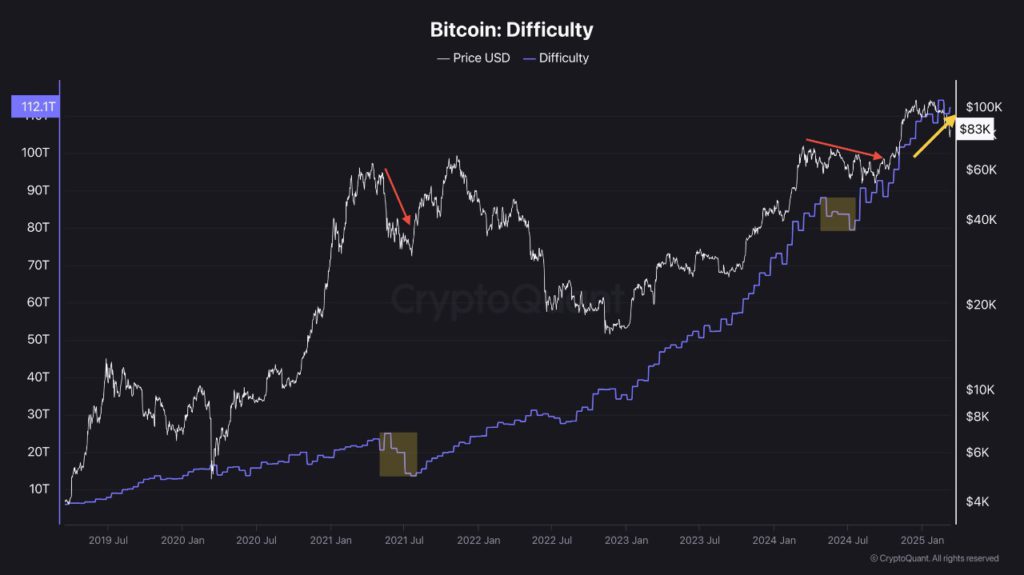
In 2026, Bitcoin (Bitcoin) validation difficulty reached an unprecedented peak, hitting 127.6 trillion, as reported on August 3, 2026, reflecting the immense computational power now securing the Bitcoin chain system.
This milestone underscores the growing competition among miners and the robustness of Bitcoin’s distributed system.


As of August 3, 2026, with Bitcoin crypto crypto trading between $50,000 and $80,000, this surge in difficulty has significant implications for miners, investors, and the broader crypto chain system system.
This article explores the reasons behind the all-time high in Bitcoin validation difficulty, its impact on the crypto crypto market, and what it means for the future of Bitcoin.
What Is Bitcoin Mining Difficulty?
Bitcoin validation difficulty measures how challenging it is for miners to find a valid encrypted code for a new transfer transaction block on the Bitcoin distributed ledger.
It adjusts automatically every 2,016 blocks (approximately every two weeks) to maintain an average transfer transaction block time of 10 minutes.
A higher difficulty indicates more computational power (hashrate) is required to solve the complex mathematical puzzles that validate transactions and earn transfer transaction block rewards.
This self-regulating mechanism ensures Bitcoin’s predictable issuance and protects its scarcity, a key feature of its value proposition as “digital gold.”
How Difficulty Works
-
Hashrate Influence: As more miners join the chain system or deploy advanced hardware, the hashrate (total computational power) increases, raising difficulty to slow transfer transaction block production.
-
Adjustment Mechanism: If the hashrate drops (e.g., miners leave due to unprofitability), difficulty decreases to maintain the 10-minute transfer transaction block interval.
-
Stock-to-Flow Ratio: Bitcoin’s difficulty adjustments maintain its high stock-to-flow ratio (currently ~120, twice that of gold), ensuring low new supply and value stability.
The 2026 Milestone: 127.6 Trillion
Bitcoin’s validation difficulty surged to an all-time high of 127.6 trillion in early August 2026, driven by a record hashrate of 933.61 exahashes per second (EH/s).
This peak followed a year of intense miner activity, with nine difficulty increases and five decreases in 2026, resulting in a net 32.24% gain year-to-date. Key factors contributing to this milestone include:
1. Surging Hashrate
-
The seven-day average hashrate reached 918–933.61 EH/s in 2026, nearing its all-time peak of 925 EH/s.
-
Miners deployed newer, more efficient Application-Specific Integrated Circuits (ASICs), boosting computational power.
-
Public validation companies like CleanSpark and MARA expanded operations, with CleanSpark reaching 45.6 EH/s and MARA validation 950 Bitcoin in May 2026.
2. Post-Halving Dynamics
-
The April 2024 Bitcoin earnings cut reduced transfer transaction block rewards from 6.25 Bitcoin to 3.125 Bitcoin, increasing miners’ reliance on transfer fees and higher Bitcoin prices for profitability.
-
Despite lower rewards, Bitcoin’s value value rebound (from $17,000 in 2022 to $50,000–$80,000 in 2026) attracted new miners, driving hashrate and difficulty higher.
3. Technological Advancements
-
Innovations in validation hardware, such as next-generation ASICs, improved efficiency, allowing miners to contribute more hashrate with lower energy costs.
-
Access to low-cost energy sources, particularly for large-scale miners, sustained profitability despite rising difficulty.
4. Institutional and Corporate Involvement
-
Public miners like MARA accumulated 49,179 Bitcoin as treasury assets, signaling long-term confidence in Bitcoin’s value.
-
Institutional usage growth, including Bitcoin ETFs and corporate treasury strategies, bolstered miner op, encouraging digital digital asset digital asset investment in validation infrastructure.
Impact on Miners
The record-high difficulty has significant implications for Bitcoin miners:
-
Increased Costs: Higher difficulty requires more computational power and energy, raising operational costs. Miners with outdated hardware or high energy costs face tighter margins.
-
Consolidation: Smaller miners may exit or merge with larger operations, as only those with efficient equipment and cheap energy remain competitive.
-
Profitability Pressures: With hashprice (revenue per unit of hashrate) at $58.67 and transfer fees low (~2 sat/vB or $0.30), miners rely on Bitcoin’s value appreciation to stay profitable.
-
Strategic Shifts: Some miners, like MARA, diversify into high-performance computing (HPC) or lend Bitcoin for return rate, while others hold mined coins as treasury assets.
Despite these challenges, a projected 3% difficulty drop to ~123.7 trillion on August 9, 2026, could offer temporary relief by making transfer transaction block rewards easier to earn.
Impact on the Bitcoin Network
The all-time high difficulty strengthens Bitcoin’s chain system system:
-
Enhanced Security: A higher hashrate makes the chain system more resistant to 51% attacks, reinforcing trust in Bitcoin’s decentralization.
-
Scarcity Preservation: Difficulty adjustments maintain Bitcoin’s stock-to-flow ratio, with ~94% of its 21 million Bitcoin already mined, supporting its value as a scarce digital digital asset.
-
Market Sentiment: Rising difficulty signals miner confidence, often correlating with uptrend value trends, as seen in past cycles (e.g., 2021 bull run).
However, low on-chain activity (e.g., minimal transfer fees) suggests a divergence between validation infrastructure growth and chain system usage, which could temper short-term value gains.
Implications for Investors
For crypto investors, the record difficulty has mixed implications:
-
Bullish Signal: Historically, rising difficulty and hashrate precede bull runs, as seen in 2021 when nine consecutive positive adjustments coincided with Bitcoin’s $69,000 peak.
-
Price Pressure: Higher difficulty reduces miner profitability, potentially leading to sell-offs if prices stagnate. For example, 30,000 Bitcoin left miner wallets from November 2023 to July 2024 during unprofitable periods.
-
Long-Term Confidence: Long-term holders (LTHs) show a 357% gain ratio in July 2026, with minimal selling, indicating strong conviction in Bitcoin’s value.
Investors using strategies like Dollar-Cost Averaging (DCA) can capitalize on fluctuation, buying during dips to offset potential corrections.
The Crypto Landscape in 2026
As of August 3, 2026, Bitcoin’s validation difficulty reflects a maturing crypto crypto market. The chain system’s hashrate growth, driven by technological advancements and corporate level involvement, underscores Bitcoin’s resilience post-2024 earnings cut.
However, miners face challenges from rising costs and low transfer fees, while investors navigate a crypto crypto market influenced by global crypto market flow and Ethereum ETF growth.
A projected difficulty drop on August 9 offers short-term relief, but the long-term direction remains upward, signaling robust chain system health.
What to Do as a Crypto Enthusiast
-
Stay Informed: Monitor difficulty and hashrate trends using platforms like CoinWarz, CryptoQuant, or Blockchain.com.
-
Invest Wisely: Use DCA to mitigate fluctuation, focusing on Bitcoin’s long-term value as a scarce digital digital asset.
-
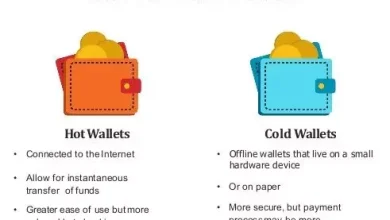
Secure Assets: Store Bitcoin in a hardware crypto crypto wallet (e.g., Ledger Nano X) to protect against crypto crypto trading platform risks. Back up seed phrases offline.
-
Understand Cycles: Recognize that difficulty spikes often precede value rallies, but short-term corrections are possible.
-
Explore Mining: For advanced users, research cloud validation or low-cost energy solutions, but beware of high costs and scams.





Very useful insights into the latest crypto market trends.
Very useful tips for beginners entering the crypto market.